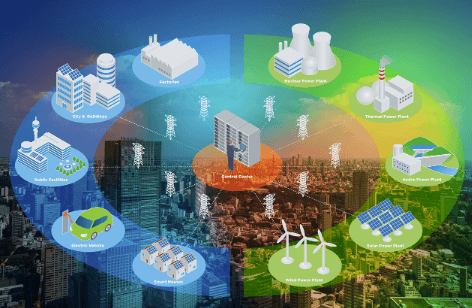
Smart grid technology integrates digital communication, sensing, and automated control to optimize generation, delivery, and consumption of electricity. It relies on real-time monitoring, data analytics, and adaptive operations to balance loads and reduce losses. By incorporating distributed resources and energy storage, it enables flexible asset use and demand response. The result is improved reliability and efficiency for utilities and consumers, though practical deployment presents technical and regulatory challenges that warrant further examination.
What Is Smart Grid Technology and Why It Matters
Smart grid technology refers to an electricity network that uses digital communication, sensing, and control technologies to improve the generation, delivery, and consumption of electric power.
The approach enhances grid reliability by real-time monitoring and adaptive operation, enabling seamless integration of distributed resources.
It supports energy storage management, enabling optimized charge/discharge cycles and resilience against fluctuations, while empowering consumers with flexible, autonomous energy choices.
Core Components That Make a Smart Grid Work
Core components of a smart grid integrate sensing, communication, and control to enable real-time visibility and adaptive operation across generation, transmission, distribution, and consumption. They enable load balancing through distributed intelligence, automation, and analytics, reducing congestion and losses.
Demand response mechanisms coordinate consumer participation and price signals, aligning demand with available supply while preserving reliability and efficiency across the grid’s flexible, scalable architecture.
Real-World Benefits for Utilities and Homes
Real-world benefits manifest through measurable improvements in reliability, efficiency, and cost management for both utilities and end users.
Utilities gain enhanced grid resilience, optimized asset utilization, and reduced operational risk, while homes experience lower bills and improved service continuity.
Solar storage and demand response enable peak shaving, energy arbitrage, and rapid response to contingencies, aligning investment with quantified performance targets.
Practical Steps to Adopt a Smarter Grid Today
Operational steps to implement a smarter grid begin with concrete assessments of existing infrastructure, regulatory frameworks, and data capabilities, linking prior observed benefits to actionable deployment paths. The approach emphasizes grid resilience and scalable communications, enabling rapid deployment of monitoring, automation, and demand response. Structured governance, standardized interfaces, and phased pilots reduce risk while delivering measurable performance improves for utilities and customers.
Frequently Asked Questions
How Secure Is Smart Grid Data From Cyber Threats?
Smart grid data exhibits robust security risks mitigated by strong data privacy measures, grid resilience, and cyber defense. Encryption standards, access control, anomaly monitoring, threat detection, firmware updates, and incident response collectively strengthen defense against cyber threats.
Can Smart Grids Fully Replace Conventional Energy Grids?
Ultimately, no; smart grids cannot fully replace conventional grids. However, grid reliability improves with advanced energy storage, enabling localized resilience and adaptive dispatch, while emphasizing that independence remains aspirational for a freedom-seeking audience.
What Is the Initial Cost vs. Long-Term Savings?
The initial capital is offset by the long term return, as payback period calculations show. Investment cost covered by efficiency gains; payback period varies by scale, usage, and incentives, with optimizations improving asset value and overall system resilience.
How Do Smart Grids Handle Renewable Intermittency?
Intermittency is mitigated through diverse generation, storage, and demand response; smart grids orchestrate resources to smooth output, enhancing grid resilience and reliability while aligning forecasts with real-time conditions. Intermittency mitigation strategies support secure, flexible operation.
See also: Smart Governance With AI
Which Regions Have the Most Advanced Smart Grid Implementations?
Australia, Western Europe, and parts of North America demonstrate the most advanced regional deployment, reflecting high grid maturity supported by interoperable standards, modern automation, and robust storage; regional deployment correlates with regulatory incentives and market-driven grid modernization.
Conclusion
The evidence supports that smart grid technology enhances reliability, efficiency, and adaptability through integrated sensing, analytics, and automated control. By coordinating distributed resources and demand response, grids reduce losses and improve resilience for utilities and consumers. While benefits are clear, realization hinges on robust cyber-physical security, interoperable standards, and thoughtful rollout. A phased adoption, guided by measurable metrics and risk assessments, yields a tangible, structured visualization of grid modernization efforts in practice.