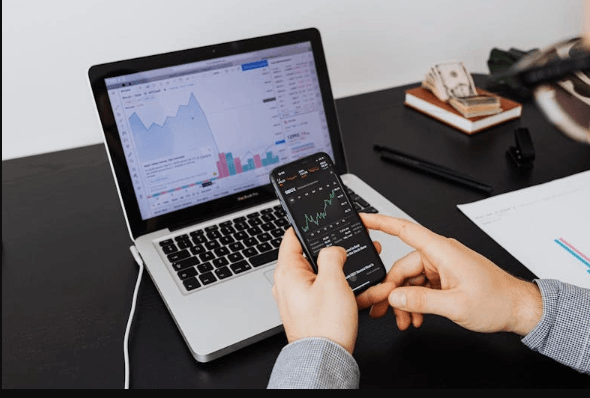
Order books in trading are real-time ledgers that show all outstanding buy and sell orders, organized by price level and submission time. They reveal depth and liquidity, indicating how much interest exists at each price and how quickly it could move. Bids, asks, and the queues between them influence price paths, while the matching engine converts orders into trades by price, time, and priority rules. Understanding these dynamics opens a path to disciplined strategies that depend on what the next moment might show.
What an Order Book Is and Why It Matters
An order book is a real-time ledger that records all buy and sell orders for a given security or market, organized by price level and timestamp.
It clarifies order book basics, showing depth and liquidity.
How Bids, Asks, and Queues Shape Price Moves
Bids, asks, and the queues that sit between them determine how price moves in real time. Order book depth reveals supply and demand shifts, with larger bids or tighter spreads pushing prices, while gaps create volatility. Watch for order book anomalies and liquidity tunnels that briefly distort incentives, guiding traders toward or away from certain price levels through visible microstructure signals.
The Matching Engine: From Orders to Trades
How does the system translate raw order entry into executed trades? The matching engine compares incoming orders with the order book, implementing defined rules for priority, price, and time. It uses order matching to pair buys and sells at compatible prices, triggering trades. This process drives price discovery, turning intentions into measurable, transparent execution while maintaining market integrity and order flow efficiency.
Reading Depth and Liquidity: Practical Signals for Traders
Reading depth and liquidity reveal how much trading interest exists at each price level and how quickly that interest can be converted into executions.
The discussion emphasizes order book dynamics and practical liquidity signals, focusing on observable gaps, clustering of bids and asks, and depth changes over time.
This data-driven view supports disciplined decisions without emotional bias or overtrading.
Frequently Asked Questions
How Do Hidden Orders Affect Apparent Liquidity in the Order Book?
Hidden orders reduce visible supply and demand, lowering quote depth while not removing liquidity. They obscure true liquidity, making apparent depth smaller than actual, which can mislead traders about immediate execution, even though hidden liquidity remains executable under desired conditions.
What Happens When Two Large Orders Collide With the Book?
Ironically, when two large orders collide with the book, liquidity shifts abruptly: large orders dominate price moves, book impact increases, and hidden liquidity may briefly absorb impact. Order visuals reveal spikes; data shows temporary depth erosion and rapid rebalancing.
Do Market Makers Influence Short-Term Price Moves Differently Than Traders?
Market making influences short term dynamics by providing liquidity and potentially stabilizing moves; traders may experience different price impact. It reveals hidden liquidity, shaping short term dynamics, as market makers absorb order flow and adjust quotes to balance risk.
See also: Smart Grid Technology Explained
How Often Do Order Books Reset During Extreme Volatility?
Order book resilience varies with market stress; resets are frequent but not uniform, as liquidity regeneration depends on ongoing flow and venue. During extreme volatility, interim pauses and re-pricing occur, signaling rapid liquidity regeneration and dynamic order book resilience.
Can Order Books Predict Price Spikes During News Events?
A notable statistic: 70% of intraday price moves occur within the first 30 seconds of a news event. Order book dynamics can hint at imminent spikes, though liquidity horizons vary and cannot guarantee precise predictions.
Conclusion
The order book is a living map of supply and demand, revealing where liquidity resides and where it may fade. By tracking bid-ask levels, queues, and depth, traders can anticipate short‑term moves with empirical signals rather than guesswork. The matching engine converts intent into trades, making promptly read depth crucial for timing. In this landscape, depth is the heartbeat, and each filled order is a pulse that shapes the market’s next step.